It’s looking like a quieter year ahead for coastal residents. National Oceanic and Atmospheric Administration (NOAA) has released its early outlook for the 2026 Atlantic hurricane season, predicting below-average activity driven by a powerful climate shift. The forecast calls for 8 to 14 named storms, with only 1 to 3 expected to reach major hurricane status.
The official season runs from June 1 to November 30, 2026. But the real story isn’t just the numbers—it’s why they’re lower. A developing El Niño eventPacific Ocean is creating wind shear that tears apart forming storms before they can strengthen. It’s a meteorological brake pedal, and it’s firmly pressed down.
What the Numbers Actually Mean
Let’s break down what “below average” looks like in practice. Historically, an average Atlantic season sees about 14.4 named storms. NOAA’s range of 8 to 14 sits comfortably under that line. Of those, roughly 3 to 6 are expected to become hurricanes (winds over 74 mph), and just 1 to 3 will hit Category 3 or higher (major hurricanes).
Here’s the twist: while the total count is lower, the intensity distribution remains risky. Even in quiet years, one well-placed storm can cause billions in damage. As Colorado State University’s tropical meteorology team notes, “It only takes one hurricane making landfall to make it an active season.” Their own forecast aligns closely with NOAA, predicting 13 named storms, 6 hurricanes, and 2 major hurricanes.
- Named Storms: 8–14 (Average: 14.4)
- Hurricanes: 3–6 (Average: 7.2)
- Major Hurricanes: 1–3 (Average: 3.2)
The El Niño Factor
So, what’s driving this calm? It’s all about the Pacific. We’re currently seeing weak La Niña conditions, but models show a 98% chance these will flip to El Niño by peak season. There’s an 80% probability it will be moderate to strong.
When warm waters build up in the central and eastern Pacific, it increases vertical wind shear across the Atlantic. Think of wind shear as invisible scissors cutting through the tops of developing storms. Without stable atmospheric conditions, cyclones struggle to organize. This mechanism has historically suppressed Atlantic activity during strong El Niño years.
Interestingly, sea surface temperatures tell a mixed story. While the western tropical Atlantic is warmer than normal—fuel for storms—the eastern and central parts are slightly cooler. This uneven heating pattern further complicates storm formation, particularly near the Cape Verde region where many intense hurricanes usually originate.
Independent Voices and Model Data
Not everyone agrees on the exact bottom line, though the general trend holds. An independent forecaster analyzing a potential “super El Niño” scenario suggests a slightly wider range: 13 to 15 named storms, with 6 to 8 becoming hurricanes. They point out that higher heat content in the Gulf of Mexico and Caribbean could still fuel significant development, especially early in the season.
Data aggregators like Artemis.bm compile various model outputs. The European Centre for Medium-Range Weather Forecasts (ECMWF) model projects 12.9 named storms and 5.7 hurricanes. The Artemis average settles at 12 and 6, respectively. These figures hover right around the historical mean, suggesting that while the season may be quieter, it’s far from inactive.
The National Hurricane Center maintains its standard tracking records, which currently show zero actual events for 2026—as expected, since the season hasn’t started yet. But their infrastructure is ready to log every system that forms between June and November.
Why Preparedness Still Matters
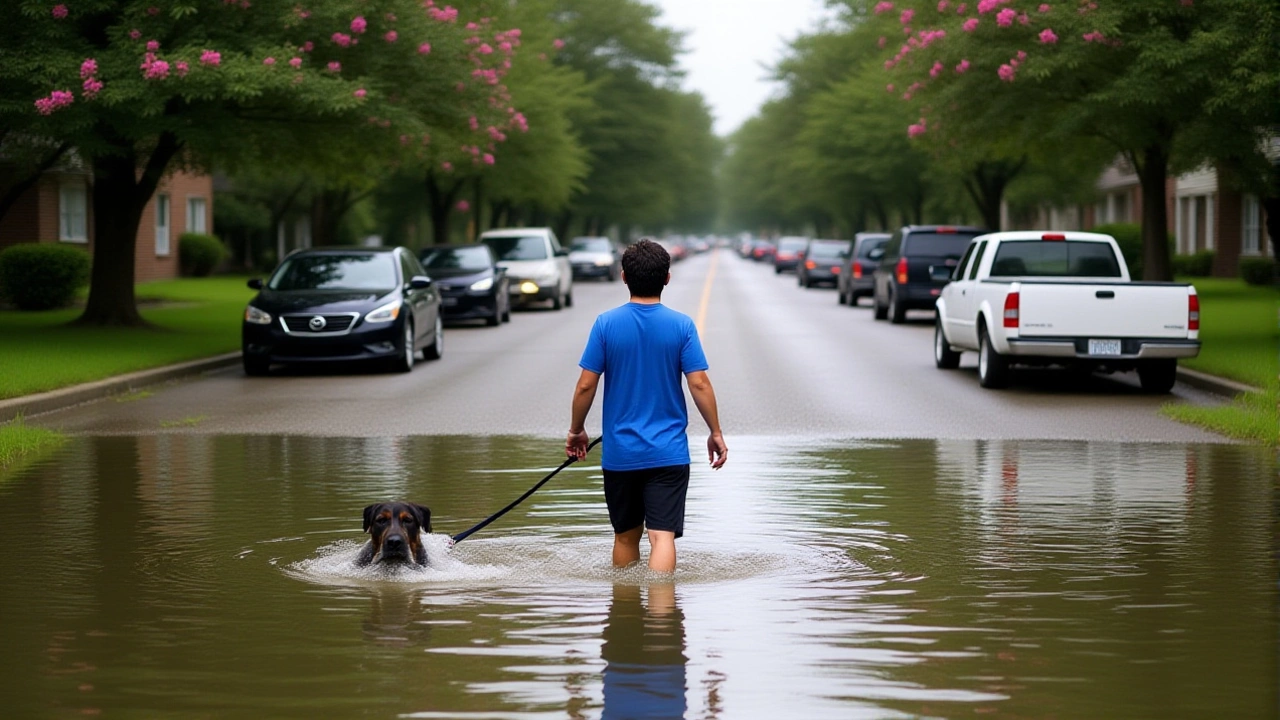
Here’s the thing people often miss: a “below average” season doesn’t mean “safe.” In 2015, another El Niño year, we saw fewer storms overall, but Hurricane Patricia became the most intense tropical cyclone ever recorded globally. Context matters.
Coastal communities from Florida to Texas should not let their guard down. Evacuation plans need updating. Insurance policies require review. Stockpiling supplies isn’t paranoia—it’s prudence. As experts remind us, location beats statistics. A single Category 4 hitting Miami makes the entire season feel catastrophic, regardless of how many other storms fizzled out at sea.
Furthermore, the Eastern and Central Pacific basins are expecting above-normal activity, with a 70% chance of heightened storm counts there. If you live along the West Coast or Hawaii, pay attention to those forecasts too. Climate patterns don’t respect political boundaries.
Frequently Asked Questions
When does the 2026 Atlantic hurricane season officially start?
The official Atlantic hurricane season begins on June 1, 2026, and ends on November 30, 2026. These dates are set by convention because historically, most tropical cyclones form within this window due to favorable ocean temperatures and atmospheric conditions.
Why is El Niño causing fewer hurricanes in the Atlantic?
El Niño increases vertical wind shear in the Atlantic basin. Wind shear acts like invisible scissors that disrupt the structure of developing storms, preventing them from organizing into sustained cyclones. With a 98% chance of El Niño occurring in 2026, forecasters expect this suppression effect to reduce overall storm counts significantly compared to neutral or La Niña years.
How does NOAA's forecast compare to Colorado State University's?
Both agencies predict a below-average season. NOAA offers a probabilistic range of 8–14 named storms, while CSU provides a specific estimate of 13 named storms. Both agree on reduced major hurricane activity, with NOAA forecasting 1–3 majors and CSU predicting 2. The slight differences reflect different modeling approaches, but the consensus points toward quieter-than-normal conditions.
Should I cancel my hurricane insurance if the season is predicted to be quiet?
Absolutely not. Forecasters emphasize that even in below-average seasons, individual storms can cause devastating damage. One direct hit can wipe out years of savings. Experts advise maintaining coverage and reviewing evacuation routes annually, regardless of seasonal predictions. Historical data shows that low-activity years still produce impactful landfalls.
What about hurricane activity in the Pacific Ocean?
While the Atlantic sees suppressed activity, the Eastern and Central Pacific basins face a 70% chance of above-normal activity. Forecasters expect 15–22 named storms in the Eastern Pacific alone. Residents in California, Hawaii, and Mexico should monitor Pacific-specific forecasts closely, as El Niño typically enhances cyclogenesis in those regions.